
The other day, two of my children (ages three and five) were up at 4:45am. Desperately clinging to the notion that I could sleep at least another hour, I asked them to be quiet. I begged them to be quiet. And when none of that worked, I told them to shut their mouths. The five year old, Rosie, immediately stiffened, told me that it was “not ok” to say that to her, and stormed off. Later that evening, after a very sleep-deprived and grumpy day, I apologized to her for telling her to shut her mouth. Her response? “That’s ok, mama. I told my friends about it and they weren’t worried.”
Huh. My five year old apparently has friends that she confides in about her troubles and from whom she seeks reassurance. How very… grown-up of her. It seems my child – wise beyond her years – has already started developing her sangha, or her community. And as children typically do, she has reminded me just how important community is.
We’ve long known social isolation raises mortality risk. But the association between sangha, or social integration, as researchers put it, goes beyond the notion that healthy people happen to be social. Using the Nurses’ Health Study, which followed 72,322 women for 22 years (1992-2014), researchers found that social integration was an independent predictor for exceptional longevity (surviving to the age of 85), even after they controlled for baseline health conditions, health behaviors, and depression. Trudel-Fitzgerald et al. found that socially integrated women lived 10% longer than isolated women, and had 41% higher odds of surviving to age 85. While we’ve known that social isolation harms us, we now have scientific evidence that social integration helps us thrive.
The word yoga comes from the root Sanskrit word yuj, which means to yoke or unite. For a long time, yoga was a mostly solitary practice, with the goal of uniting the self (jiva) with the true Self (atman), or the individual with the universal, cosmic whole. But the data above suggest union does not stop with the self – it extends to the people we live, work, and persevere alongside.
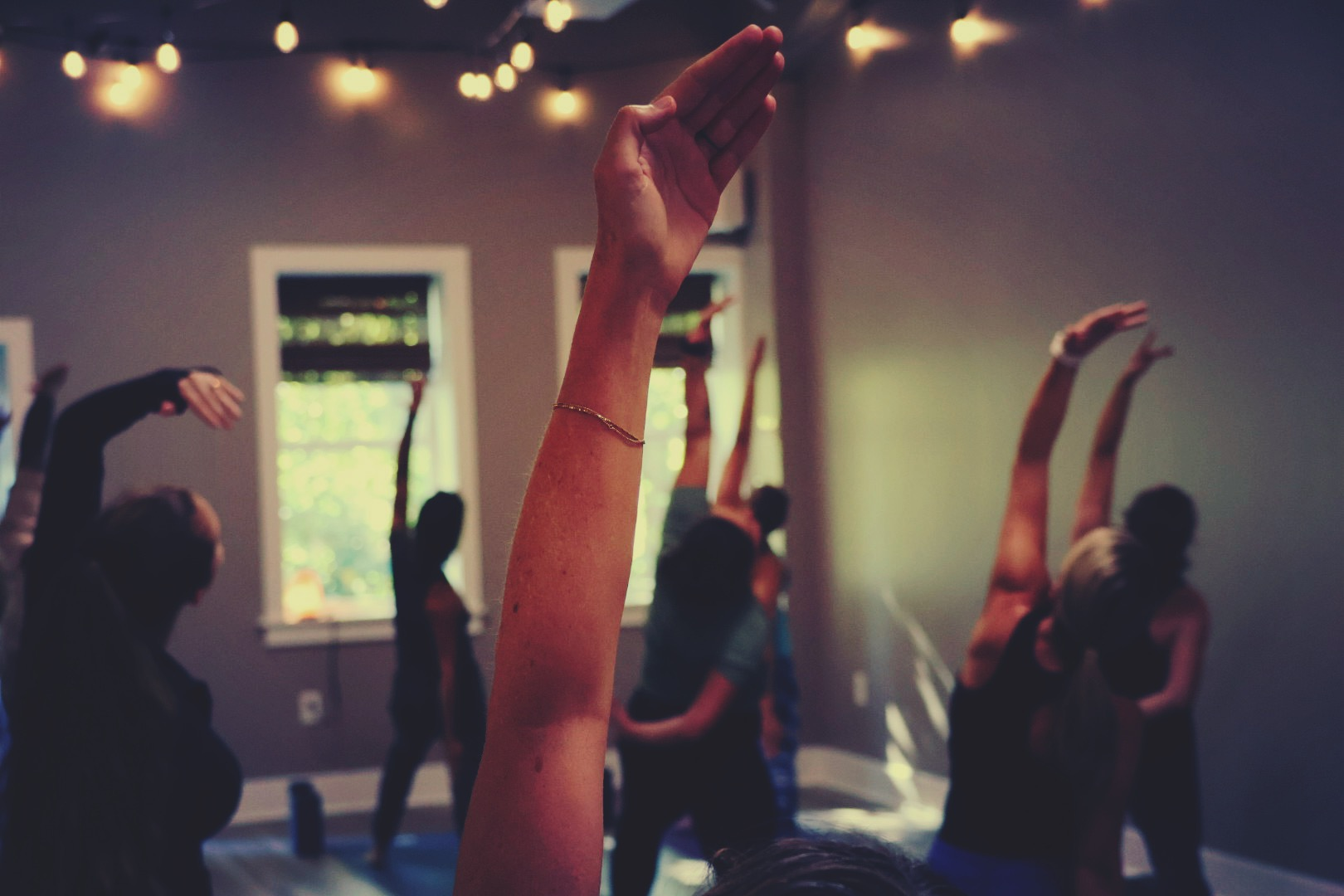
Walk into any studio and you’ll hear the same conversation – what does it mean to age well? Sangha is always a part of the answer. In today’s world, sangha can take many forms: book clubs, faith-based groups, walking groups, sports teams. My own sangha is rooted in the relationships formed in my yoga teacher training. I’ve recently expanded it (albeit, somewhat reluctantly) by joining my wife’s rugby team. Your sangha could also be the people who continue to show up next to you on the mat. Or if you’re five, it could be your kindergarten buddies who help you work through your mama’s sleep-deprived parenting missteps.
Leave a Reply